drilling bentonite – it’s more than just mud, trust me. I’ve spent years on rigs, seen firsthand how a good bentonite mix can save you time, money, and a whole lot of headache. We're talking about stabilizing boreholes, controlling fluid loss, and ultimately, hitting your drilling targets safely and efficiently. It's the unsung hero of a lot of successful projects, and a poorly understood one at that. Understanding its properties and applications is crucial for anyone involved in drilling operations, from seasoned engineers to new apprentices.
The global drilling market is booming, driven by infrastructure development, resource exploration, and increasing energy demands. The UN estimates a global infrastructure investment need of around $5.7 trillion annually just to meet current demands. And practically every single one of those projects will rely on effective drilling fluid management. This is where drilling bentonite steps in. Poor borehole stability can lead to costly delays, environmental risks, and even catastrophic failures. A solid understanding of drilling bentonite isn’t just good practice – it’s a necessity for responsible and efficient operations.
Simply put, drilling bentonite is a specialized clay, typically sodium montmorillonite, used to create drilling fluids. It’s not something you pick up at the hardware store; it’s engineered for performance. What makes it so valuable? Its incredible swelling capacity when mixed with water, forming a viscous gel that does a ton of heavy lifting during the drilling process. This ties directly into modern industry, because increasingly complex drilling projects—think geothermal energy, deepwater oil exploration, or even large-scale infrastructure—demand precise fluid control that only a high-quality bentonite can deliver.
The Importance of Drilling Bentonite
Look, I've seen enough holes collapse to know that proper borehole stabilization isn't just a detail; it's fundamental. Drilling bentonite provides that stability. It forms a filter cake on the borehole walls, preventing fluid loss and maintaining the integrity of the formation. Without it, you’re fighting a losing battle against cave-ins and stuck drill strings.
And it’s not just about preventing disaster. Using the right bentonite mix can dramatically improve drilling rates. By reducing friction, keeping the bit cool, and efficiently removing cuttings, you can save significant time and money on every project. That’s the kind of efficiency that keeps projects on schedule and within budget, which is what everyone ultimately cares about.
Defining Drilling Bentonite
At its core, drilling bentonite is a naturally occurring clay mineral. But it’s not just any clay. It’s specifically sodium montmorillonite, chosen for its unique swelling and viscosity properties. When water is added, these tiny clay particles expand and interlock, creating a gel-like substance. It’s that gel that provides the necessary properties for effective drilling fluid.
This isn’t some newfangled invention either. Bentonite has been used for centuries, historically for sealing dams and as a binding agent. But its application in drilling has revolutionized the industry, enabling us to reach greater depths and tackle more challenging geological formations. It's a direct enabler of modern infrastructure and resource access.
It’s important to differentiate it from other types of bentonite. Calcium bentmorillonite, for example, isn’t as effective for drilling because it doesn't swell as much. That’s why the specific composition and quality control are so vital when selecting a drilling bentonite product.
Key Properties of Drilling Bentonite
The performance of drilling bentonite hinges on a few key characteristics. First is viscosity – the thickness of the fluid, which dictates its ability to carry cuttings to the surface. Second, is filtration control – how well it prevents fluid loss into the formation. Third, yield point – the shear stress required to initiate flow, indicating its ability to suspend cuttings when circulation stops.
These properties aren’t static. They’re affected by factors like the bentonite’s purity, the water chemistry, and the addition of other additives. That’s why understanding the interplay between these variables is essential for optimizing your drilling fluid. A good bentonite supplier will provide detailed specifications and guidance on mixing and maintenance.
Finally, and often overlooked, is the bentonite’s swelling capacity. The ability to expand when hydrated is what creates the essential gel structure. Higher swelling capacity means greater borehole stability and more effective cuttings removal. You don’t want a bentonite that shrinks on you!
Real-World Applications
I’ve seen drilling bentonite used in everything from water well drilling to massive tunneling projects. In the oil and gas industry, it’s critical for maintaining borehole stability and controlling formation pressure during exploration and production. Geothermal drilling heavily relies on bentonite to manage the extreme temperatures and pressures encountered.
But it’s not just large-scale projects. Environmental remediation, dam construction, and even horizontal directional drilling for utility installations all benefit from the unique properties of drilling bentonite. In post-disaster relief operations, it’s used to quickly stabilize landslides and create temporary access roads.
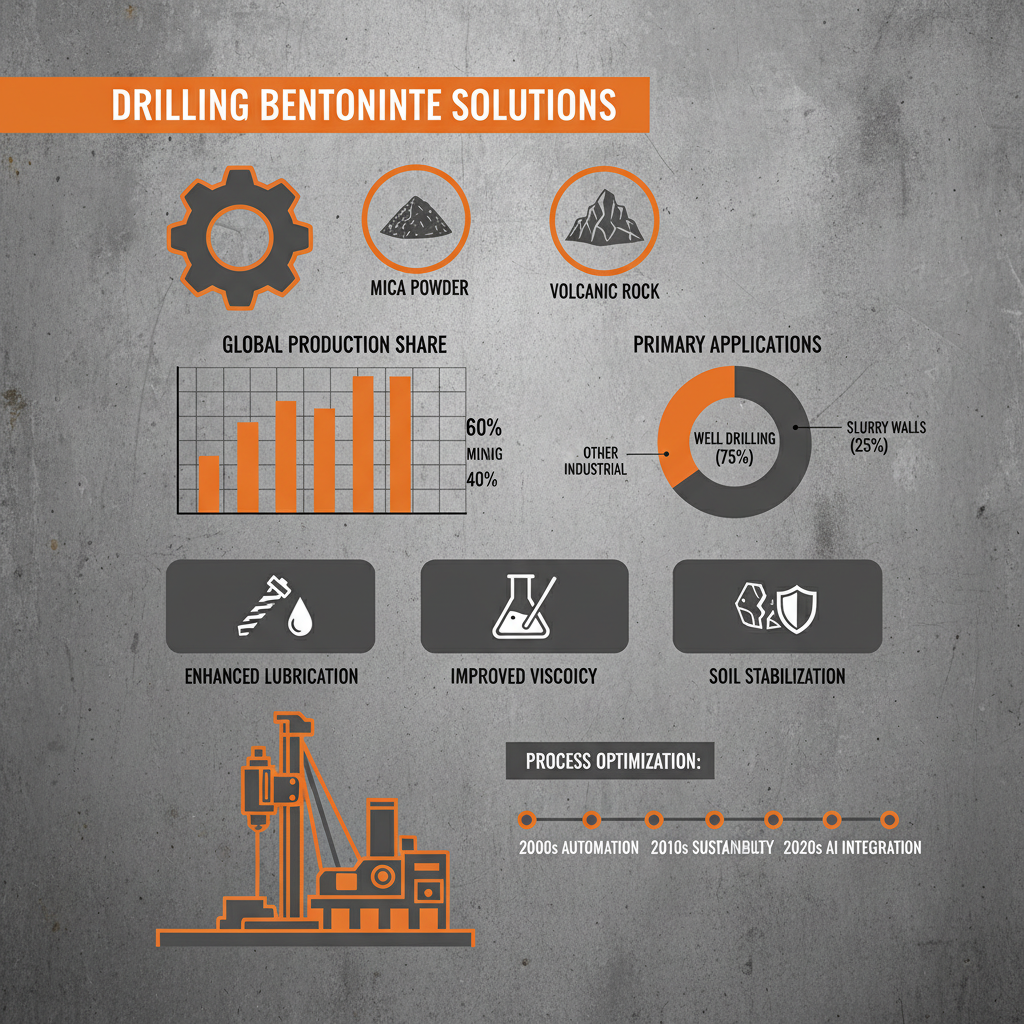
Drilling Bentonite Application Performance
Advantages and Long-Term Value
The economic benefits of using quality drilling bentonite are substantial. Reduced drilling time translates directly into lower labor costs and increased productivity. Minimizing borehole instability prevents costly downtime due to stuck drill strings or cave-ins. And a properly formulated fluid reduces the risk of environmental damage, saving on potential remediation expenses.
Beyond the purely financial, there's the aspect of safety. A stable borehole is a safer borehole. And using an environmentally responsible product contributes to a positive reputation and builds trust with stakeholders. Choosing the right bentonite is an investment in the longevity and sustainability of your projects.
Future Trends in Bentonite Technology
We’re seeing increasing research into modified bentonites, incorporating polymers and other additives to enhance performance. Nanotechnology is also playing a role, with nano-bentonite particles offering even greater swelling capacity and filtration control. Digital monitoring and automated mixing systems are becoming more prevalent, allowing for real-time adjustments to fluid properties.
Sustainability is another key driver. There's growing interest in finding ways to recycle or reuse spent drilling fluids, minimizing waste and reducing environmental impact. And the development of more eco-friendly bentonite sources is a priority for many suppliers.
Finally, the integration of AI and machine learning to predict bentonite performance based on site-specific conditions promises to further optimize drilling operations and reduce costs.
Challenges and Solutions
One of the biggest challenges is maintaining consistent quality. The composition of natural bentonite deposits can vary significantly, and contamination is a concern. That’s why sourcing from a reputable supplier with rigorous quality control procedures is crucial.
Another issue is dealing with incompatible water chemistries. Hard water or water with high salinity can negatively impact bentonite performance. Solutions include pre-treating the water or using specialized bentonite formulations designed for specific water conditions.
Finally, improper mixing and maintenance can lead to fluid degradation. Proper training of personnel and adherence to recommended mixing procedures are essential for maximizing the lifespan and effectiveness of the drilling fluid.
Summary of Drilling Bentonite Challenges and Solutions
| Challenge |
Root Cause |
Impact on Drilling |
Potential Solution |
| Inconsistent Bentonite Quality |
Variations in natural deposits & contamination |
Reduced fluid performance, instability |
Source from reputable suppliers w/ QC |
| Water Chemistry Issues |
Hard water, salinity, incompatible ions |
Reduced swelling, flocculation |
Pre-treat water, use specialized bentonite |
| Improper Mixing |
Incorrect ratios, inadequate hydration |
Poor viscosity, filter cake issues |
Follow mixing procedures, train personnel |
| Fluid Degradation |
Contamination, shear stress, temperature |
Loss of viscosity, increased fluid loss |
Regular monitoring, additive adjustments |
| Borehole Instability |
Insufficient bentonite, reactive formations |
Cave-ins, stuck pipe, lost circulation |
Increase bentonite concentration, use polymers |
| Environmental Concerns |
Disposal of spent drilling fluids |
Environmental damage, regulatory issues |
Recycle/reuse fluids, responsible disposal |
FAQS
That’s a great question. Bentonite is a natural clay that provides viscosity and filtration control through swelling. Polymers are synthetic additives that offer different functionalities, like shale inhibition or fluid loss control. Often, they’re used together – bentonite as the base, and polymers to fine-tune the fluid's properties for specific geological conditions. Polymers can get expensive, so bentonite is the workhorse in most cases.
It depends heavily on the application and water quality, but a good starting point is around 4-8 pounds of bentonite per barrel (approximately 159 liters) of water. However, don’t just blindly follow a recipe! You need to test the viscosity and filtration rate of the fluid after mixing and adjust the bentonite amount accordingly. Proper testing is vital. Your bentonite supplier can provide specific guidance.
No, absolutely not. While other clays exist, they lack the unique swelling and viscosity properties of sodium montmorillonite. Using the wrong clay can lead to borehole instability, lost circulation, and even a complete drilling failure. It’s a false economy to try and save money on a substandard product. Stick with a specifically engineered drilling bentonite.
Bentonite dust can be irritating to the lungs, so it’s crucial to take precautions. Always wear a properly fitted dust mask or respirator when handling dry bentonite. Mix the bentonite in a well-ventilated area and avoid creating excessive dust clouds. Proper PPE is non-negotiable on the job site.
Lumpy slurry indicates inadequate hydration. Ensure you’re adding the bentonite slowly to the water while continuously mixing with a high-shear mixer. Pre-hydrating the bentonite in a small amount of water to create a slurry before adding it to the bulk water can also help. Don’t just dump dry bentonite into a tank and expect it to mix properly!
Bentonite is a naturally occurring mineral, and generally considered environmentally benign. However, proper disposal of spent drilling fluids is critical. Many companies now offer bentonite recycling services, which is the most sustainable option. Avoid simply dumping the fluid into waterways or landfills, and always comply with local environmental regulations.
Conclusion
From stabilizing boreholes to optimizing drilling rates, drilling bentonite is an indispensable component of countless projects across the globe. It's a surprisingly complex material, and understanding its properties, applications, and potential challenges is essential for anyone involved in drilling operations. Investing in quality bentonite and proper training will pay dividends in terms of cost savings, safety, and project success.
As technology continues to evolve, we can expect to see even more innovative applications of drilling bentonite, driven by the need for greater efficiency, sustainability, and environmental responsibility. Staying informed about these advancements is crucial for remaining competitive in the ever-changing drilling industry.