When sourcing high-density mineral fillers, the technical capabilities of barite powder manufacturers often determine the stability of the final industrial application. Whether used in drilling fluids, paint formulation, or specialized construction materials, the precision of particle size distribution and purity remains the primary concern for procurement engineers. Finding a partner that balances raw ore quality with advanced processing technology is essential for maintaining consistent product performance across large-scale production batches.
The integration of non-metallic mineral processing into broader categories like Chemicals, Hot Products, Natural Ore Products, and Other More Products highlights the versatility of barite. In high-pressure environments, such as deep-well drilling or heavy-duty concrete reinforcement, the specific gravity and chemical inertness of the powder prevent structural failure and fluid leakage. This makes the selection of a manufacturer not just a matter of price, but a critical decision regarding risk management and operational safety.
Navigating the complexities of mineral specifications requires a deep understanding of the relationship between raw ore refinement and industrial utility. This guide analyzes the critical benchmarks for evaluating barite powder manufacturers, focusing on how production scale, quality control, and customization capabilities influence the total cost of ownership and project outcomes in the mining and chemical sectors.


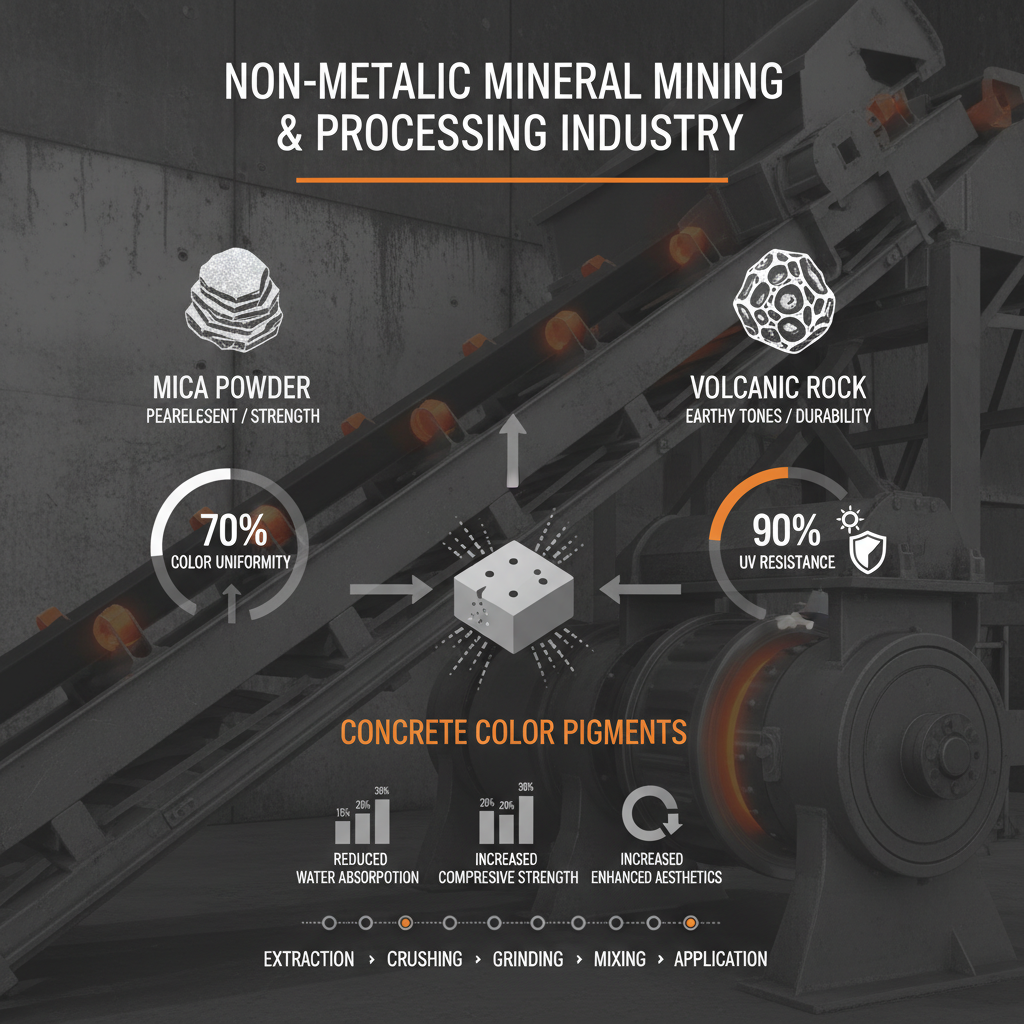
Non-metallic mineral processing involves the transformation of raw ores into standardized industrial powders through a rigorous series of crushing, grinding, and classification steps. In the context of barite production, the goal is to maximize the specific gravity while minimizing impurities that could compromise the chemical stability of the end product. The process requires a sophisticated understanding of mineralogy to ensure that the resulting powder maintains a consistent chemical composition across different mining veins.
For an enterprise like China Lingshou County Fangzhishun Mineral Products Co., LTD., which has operated since 1984, the integration of mining, processing, and development allows for tighter control over the entire supply chain. By employing professional mining teams and chemical processing experts, the transition from raw ore to finished powder is managed through advanced production lines that ensure the material meets the stringent demands of the non-metallic mineral industry.
The quality of barite powder is primarily measured by its chemical purity (BaSO4 content) and its physical granulometry. Purity is vital because contaminants can react unexpectedly with other chemicals in a mixture, leading to degradation or loss of functionality. In precision applications, even a small percentage of impurity can alter the viscosity of a drilling fluid or the opacity of a coating, making rigorous laboratory testing an absolute necessity.
High-performance mineral powders must balance particle fineness with bulk density; achieving a consistent mesh size—such as 400 to 1250 mesh—directly impacts the adsorption capacity and the structural integrity of composite materials like aerated concrete bricks.
Furthermore, the stability of the supply is a critical quality parameter. A manufacturer's ability to store tens of thousands of tons of inventory in modern warehouses ensures that the quality remains consistent regardless of seasonal mining fluctuations. This stability prevents the "batch variance" that often plagues smaller suppliers, providing industrial users with a predictable material baseline for their own production cycles.
The value of barite powder is realized through its ability to increase the density of a medium without altering its chemical properties. In the oil and gas sector, this allows for the control of formation pressure, while in the construction sector, it enables the production of high-strength blocks. The efficiency of these applications depends on the powder's ability to blend uniformly without clumping or separating during the mixing process.
When analyzing the cost-to-performance ratio, the focus shifts from the unit price per ton to the impact on the final product's lifespan and performance. For instance, using highly refined powders in road paving materials improves durability and reduces maintenance costs over time. The ability to customize specifications allows users to optimize the material for their specific environment, whether it be municipal highways or industrial flooring.
Barite and related non-metallic powders are extensively used in the creation of advanced concrete blocks. By processing raw materials like fly ash and barite, manufacturers can produce aerated concrete bricks and small hollow blocks that offer superior insulation and structural strength. These materials are essential for modern urban construction where weight reduction and thermal efficiency are prioritized without sacrificing load-bearing capacity.
Beyond construction, these minerals serve critical roles in environmental protection and agriculture. The adsorption properties of refined powders enable the separation of heavy metal ions from urban and factory sewage, purifying water sources. In agriculture, the addition of trace elements like silicon, boron, and sulfur through composite mineral fertilizers improves soil structure and crop yield, demonstrating the broad utility of non-metallic mineral processing.
The transition toward "intelligent mining" is reshaping how non-metallic minerals are extracted and processed. The use of automated production lines and real-time quality monitoring allows manufacturers to reduce waste and increase the precision of the final powder mesh. This technological shift is likely to lead to the development of ultra-fine powders that can be used in polymer filling materials and synthetic modifications with higher efficiency.
Sustainability is becoming a core driver in the industry. There is an increasing focus on utilizing byproduct materials, such as fly ash, as raw materials for high-purity alum extraction or the synthesis of bauxite. This circular economy approach not only reduces the environmental footprint of mining operations but also lowers the cost of production for secondary industrial materials.
Looking ahead, the demand for customized mineral specifications will grow. As industries move toward more specialized composite materials, the ability of a factory to provide personalized design and precise sample processing will become a primary competitive advantage. The role of the manufacturer is evolving from a simple commodity supplier to a technical partner in material science.
Procuring minerals on a large scale often involves risks related to price volatility and quality inconsistency. Many buyers face challenges when the chemical composition of the powder fluctuates between shipments, leading to production downtime or product failure. Establishing a relationship with a supplier that controls its own mines and employs dedicated proofing engineers is the most effective way to mitigate these risks.
Another significant challenge is the alignment of mesh specifications with the actual application. A powder that is too coarse may fail to blend, while one that is too fine may increase the viscosity of the mix beyond manageable levels. This is why detailed product analysis and the ability to customize specifications (e.g., from 400 to 1250 mesh) are vital for operational success.
Finally, logistics and storage capacity play a pivotal role in maintaining a lean supply chain. A manufacturer with significant warehousing capacity can shield the buyer from seasonal price spikes and ensure a steady flow of materials, which is crucial for projects with tight deadlines and high volume requirements.
| Mesh Specification | Primary Application | Key Technical Benefit | Recommended Use Case |
|---|---|---|---|
| 400 Mesh | Road Paving | High Durability | Municipal Highways |
| 600 Mesh | Concrete Blocks | Structural Stability | Aerated Bricks |
| 800 Mesh | Sewage Treatment | High Adsorption | Industrial Purification |
| 1000 Mesh | Polymer Filling | Fine Dispersion | Synthetic Materials |
| 1250 Mesh | Chemical Synthesis | Ultra-High Purity | Specialty Ceramics |
| Customized | R&D Projects | Tailored Performance | Prototype Testing |
A high-quality manufacturer is defined by their control over the entire production chain, from owning raw mineral mines to employing advanced processing lines and quality control experts. They should provide consistent purity levels, a wide range of mesh specifications (such as 400 to 1250 mesh), and have the warehousing capacity to ensure a stable supply regardless of seasonal fluctuations.
Mesh size determines the particle fineness and surface area of the powder. Coarser powders (e.g., 400 mesh) are ideal for high-durability road paving materials, while ultra-fine powders (1000-1250 mesh) are required for polymer filling and synthetic material modifications where a smooth dispersion and high reactivity are necessary for the final product's integrity.
Yes, refined mineral powders have excellent adsorption capabilities, making them highly effective in treating urban and factory sewage. When mixed with wastewater, they can separate pollutants and heavy metal ions, assisting in the purification of water and supporting overall environmental protection goals for industrial facilities.
Integrated companies reduce the risk of raw material shortages and price volatility. Because they control the mining process, they can ensure the initial ore quality is consistent, which directly translates to a more stable finished powder. This vertical integration typically results in better quality control and more competitive long-term pricing for the buyer.
Customization allows engineers to align the material's physical properties with the specific requirements of a project, such as a particular density for a concrete block or a specific purity for a chemical catalyst. This prevents material waste, optimizes performance, and reduces the likelihood of failure in high-pressure or high-stress industrial environments.
Fly ash serves as a versatile raw material that can be processed into various concrete blocks, including aerated and hollow bricks. It can also be used to extract high-purity alum, synthesize bauxite, or prepare non-oxide ceramic materials like SiC powder, making it a critical component in sustainable and cost-effective construction materials.
Selecting the right partner among barite powder manufacturers requires a comprehensive evaluation of their technical infrastructure, ore quality, and ability to maintain consistent mesh specifications. From enhancing the durability of municipal roads to purifying industrial wastewater, the impact of mineral purity and particle distribution is profound. By focusing on manufacturers who integrate mining with professional chemical processing, businesses can ensure their materials meet the rigorous demands of modern industrial engineering.
For enterprises seeking reliable mineral solutions and tailored powder specifications, partnering with an experienced industry leader is the most secure path to operational efficiency. To explore a wide range of Natural Ore Products and specialized Chemicals, you are invited to visit the official resource center at https://www.shunmining.com for detailed technical guidance and product analysis.