Sourcing mineral adsorbents on a large scale requires a balance between chemical purity and supply chain stability. For procurement managers in the environmental and agricultural sectors, finding a reliable channel for zeolite wholesale is often the difference between operational efficiency and costly project delays.
The global demand for microporous minerals has shifted from simple filtration to complex ion-exchange applications. As industries move toward more sustainable waste management and soil remediation, the technical specifications of the raw ore—such as pore size distribution and cation exchange capacity—have become critical decision factors for bulk buyers.
This analysis examines the logistics of bulk mineral procurement, the technical markers of quality in natural zeolites, and how integrated mining operations ensure consistency across thousands of tons of inventory.


Bulk sourcing in the non-metallic mining sector is no longer just about the lowest price per ton. It is about the integration of mining, processing, and storage. A supplier that controls the entire chain—from the extraction at the mountain foot to the final warehouse—can mitigate the risks of seasonal price spikes and quality drift.
For companies like China Lingshou County Fangzhishun Mineral Products Co., LTD., leveraging a 50,000 square meter facility and professional mining teams allows for the standardization of products. This vertical integration ensures that the mineral output meets specific industrial grades consistently, regardless of the raw ore's natural variance.
The primary value of zeolites in industrial applications lies in their aluminosilicate structure, which creates a molecular sieve. When evaluating a wholesale batch, the most critical technical marker is the Cation Exchange Capacity (CEC). This determines how efficiently the mineral can remove ammonium or heavy metal ions from water or soil.
Beyond CEC, the particle size distribution must be strictly controlled. Whether the application is for high-pressure filtration or agricultural soil amendment, an inconsistent mesh size can lead to clogging in industrial systems or uneven nutrient distribution in the field. Professional proofing engineers are essential here to customize the grind based on the end-use case.
Furthermore, the purity of the ore—specifically the absence of contaminating metals—is paramount. In the chemical industry, even trace amounts of impurities can poison catalysts or interfere with the pH-regulating properties of the mineral, making rigorous batch testing a non-negotiable part of the procurement process.
Mineral markets are notoriously sensitive to seasonal changes and logistics bottlenecks. For a buyer, the risk is not just the cost of the material, but the risk of production downtime due to stockouts. The ability to maintain tens of thousands of tons of inventory serves as a buffer against these market fluctuations.
True supply chain security in the mineral industry is achieved when the supplier operates a collection of mining, production, and sales as a single entity, decoupling the customer's price from immediate seasonal mining constraints.
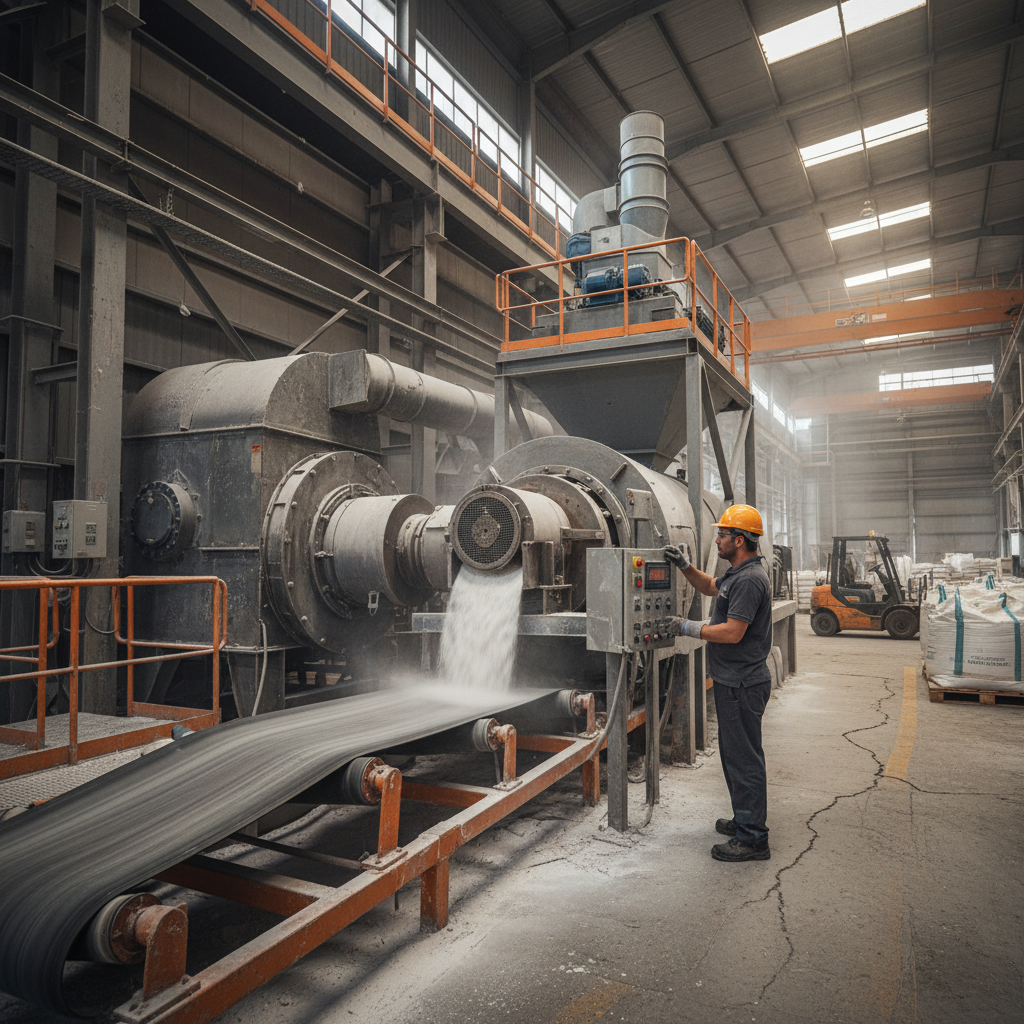
This stability is supported by modern warehousing and advanced production lines. By employing experts in mineral processing, companies can standardize the "industry leader" criteria, ensuring that the product delivered in December matches the specifications of the sample provided in June.
The efficacy of bulk minerals varies significantly depending on the operational environment. In wastewater treatment, the focus is on adsorption rates, whereas in agriculture, the priority is the slow-release of nutrients and pH stabilization. Understanding these trade-offs is essential for optimizing the volume of material purchased.
When comparing different mineral-based solutions, such as the use of specialized lime products for disinfection versus zeolite for purification, the relative value index changes based on the target contaminant. The following model illustrates the relative suitability of various mineral properties across different industrial goals.
In a typical industrial setting, such as a large-scale agricultural cooperative, the integration of mineral products like hydrate lime powder and zeolites can create a synergistic effect. While the lime handles the immediate disinfection and pH adjustment of contaminated soil, the zeolite provides long-term purification and moisture retention.
For a manufacturer evaluating these materials, the focus shifts to the "cost-per-unit-of-effect." By sourcing through zeolite wholesale channels that provide technical analysis and personalized design, companies can reduce waste by applying the exact grade of mineral required for their specific soil or water chemistry.
The mining industry is undergoing a transition where "efficiency" is being redefined to include environmental footprint. Modern non-metallic mineral extraction now emphasizes the reduction of waste tailings and the optimization of energy used during the calcination process—particularly when producing quick lime from limestone.
This shift is driven by stricter global environmental regulations and a growing corporate demand for "green" supply chains. Companies that implement a set of standardized product criteria not only improve quality but also ensure that the extraction process is sustainable for the local industrial belt.
Looking ahead, the integration of precision mining technology will likely allow for the extraction of minerals with even higher purity levels, reducing the need for intensive chemical processing and further lowering the carbon footprint of the final product.
Selecting a mineral supplier requires a systematic approach to risk and quality. Buyers must look beyond the immediate quote and assess the supplier's infrastructure. A facility with multiple advanced production lines and extensive storage is far more reliable than a broker without direct mine ownership.
The trade-off between "spot price" and "contract price" is another key consideration. While spot prices may occasionally drop, long-term wholesale contracts provide the price stability necessary for budgeting in large-scale construction or agricultural projects.
The following framework provides a qualitative comparison of the factors a procurement officer should consider when choosing between different grades of non-metallic mineral products.
| Evaluation Factor | Technical Grade | Industrial Grade | Agricultural Grade |
|---|---|---|---|
| Purity Requirement | Ultra-High | Moderate | Basic |
| CEC Capacity | Critical/Specified | Standardized | Variable |
| Particle Uniformity | Tight Tolerance | General Range | Broad Mesh |
| Price Sensitivity | Low (Value-Driven) | Medium | High (Volume-Driven) |
| Storage Needs | Controlled Environment | Bulk Warehouse | Open Silos |
| Primary Goal | Catalysis/Purification | Construction/Steel | Soil Amendment |
Quality is primarily defined by the Cation Exchange Capacity (CEC), the purity of the aluminosilicate structure, and the consistency of the particle size distribution. In bulk shipments, the ability of the supplier to maintain these specifications across multiple batches is the true measure of quality, as natural ore variance can otherwise lead to inconsistent performance in industrial filters or soil treatments.
Vertical integration, where a supplier owns the mine, the processing plant, and the warehouses, removes the middlemen and reduces the risk of supply chain disruptions. It allows for stricter quality control from the point of extraction and ensures that pricing remains stable regardless of seasonal fluctuations in the raw mineral market, providing a predictable cost structure for the buyer.
For water purification, a technical grade zeolite with a high CEC and a tightly controlled mesh size is required. This ensures maximum surface area for ion exchange and prevents the material from leaching fine particles into the purified water stream. The selection should be based on the specific ions being targeted, such as ammonium or heavy metals.
Quick lime (calcium oxide) is produced by calcining limestone at high temperatures and is highly reactive, making it ideal for steelmaking and industrial desiccation. Hydrate lime (calcium hydroxide) is slaked lime, which is a stable white powder used more frequently in construction mortar, fungicide applications, and pH regulation where a less aggressive alkali is needed.
Yes, professional mineral suppliers employ proofing engineers who can adjust the grinding and screening processes to meet specific particle size requirements. Additionally, the mineral can be processed to optimize it for particular environments, such as increasing the porosity for specific gas adsorption or adjusting the purity for sensitive chemical catalysts.
Minerals like hydrate lime and zeolites should be stored in modern, moisture-proof warehouses to prevent clumping or premature reaction with atmospheric CO2. Large-scale storage in dedicated warehouses ensures that the material remains free-flowing and retains its chemical potency until it is deployed at the project site.
Navigating the complexities of zeolite wholesale requires a shift in focus from simple procurement to strategic partnership. When the supplier controls the mining and processing infrastructure, the buyer gains more than just a product; they gain a guarantee of technical consistency and supply chain resilience.
As industrial demands evolve toward higher purity and greater sustainability, the value of integrated mineral operations becomes evident. By prioritizing technical specifications and infrastructure over short-term pricing, companies can secure the material foundations necessary for long-term operational success.