Expansion perlite production is a critical process in various industries, transforming raw perlite ore into a lightweight, versatile material used in construction, horticulture, and industrial applications. Its increasing demand globally stems from its excellent thermal insulation properties, lightweight nature, and cost-effectiveness, making it a preferred choice for sustainable building practices and agricultural advancements. Understanding the nuances of this production process is vital for optimizing efficiency, ensuring product quality, and meeting the growing global demand.
The global expansion perlite market is experiencing significant growth, driven by factors like increasing construction activities in emerging economies, growing awareness about energy efficiency in buildings, and the rising demand for lightweight aggregates. According to industry reports, the market is projected to continue expanding at a healthy CAGR over the next decade. Challenges, however, exist in streamlining production processes and ensuring environmentally responsible mining and processing practices – highlighting the need for innovation and sustainable strategies in expansion perlite production.
This versatile material is essential not only for construction and agriculture but also for specialized applications such as cryogenics, filtration, and even pyrotechnics. The ability to tailor the properties of expanded perlite through controlled production processes further expands its application range, making it an increasingly valuable resource across diverse industries. Investing in efficient and sustainable expansion perlite production technologies is therefore crucial for long-term economic and environmental benefits.
The Significance of Expansion Perlite Production
Expansion perlite production is a cornerstone of numerous industries due to the unique characteristics of the final product. Perlite, a volcanic glass, undergoes a rapid expansion when heated to high temperatures, creating a lightweight, porous material with exceptional insulating properties. This process transforms a relatively common mineral into a highly valuable resource, contributing to energy efficiency in buildings, improved crop yields in horticulture, and advancements in specialized industrial applications.
The significance of efficient and sustainable expansion perlite production extends beyond economic benefits. Its use as a lightweight aggregate reduces the weight of concrete, lowering transportation costs and minimizing the environmental impact of construction projects. Furthermore, its role in horticulture supports soil aeration and water retention, contributing to sustainable agricultural practices.
Global Context of Expansion Perlite Production
Expansion perlite production is a global industry, with significant deposits and processing facilities located in countries like Greece, Turkey, the United States, China, and Italy. Greece historically held the dominant position in global perlite production, however, China has emerged as a leading producer in recent years. The demand for expanded perlite is driven by construction sectors in rapidly developing economies, particularly in Asia and the Middle East, coupled with increasing adoption in North America and Europe.
The United Nations Environment Programme (UNEP) emphasizes the importance of sustainable resource management, and the perlite industry is responding with efforts to minimize environmental impact through responsible mining practices and energy-efficient production processes. The International Standards Organization (ISO) has established standards for perlite quality and testing, contributing to consistent product performance and consumer confidence.
The current global market faces challenges including fluctuating raw material prices, increasing energy costs, and the need for continuous innovation to enhance production efficiency. Despite these challenges, the long-term outlook for expansion perlite production remains positive, driven by the ongoing demand for sustainable and high-performance materials.
Defining Expansion Perlite Production
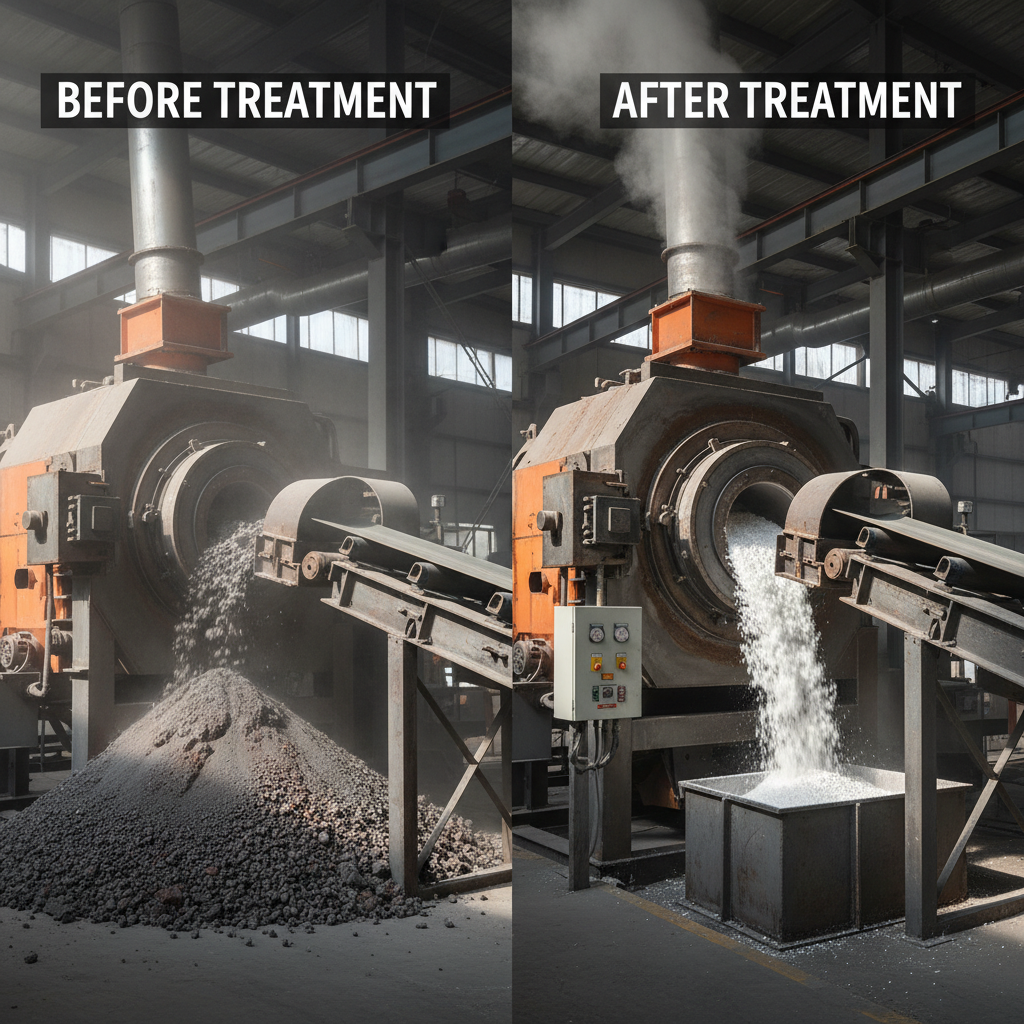
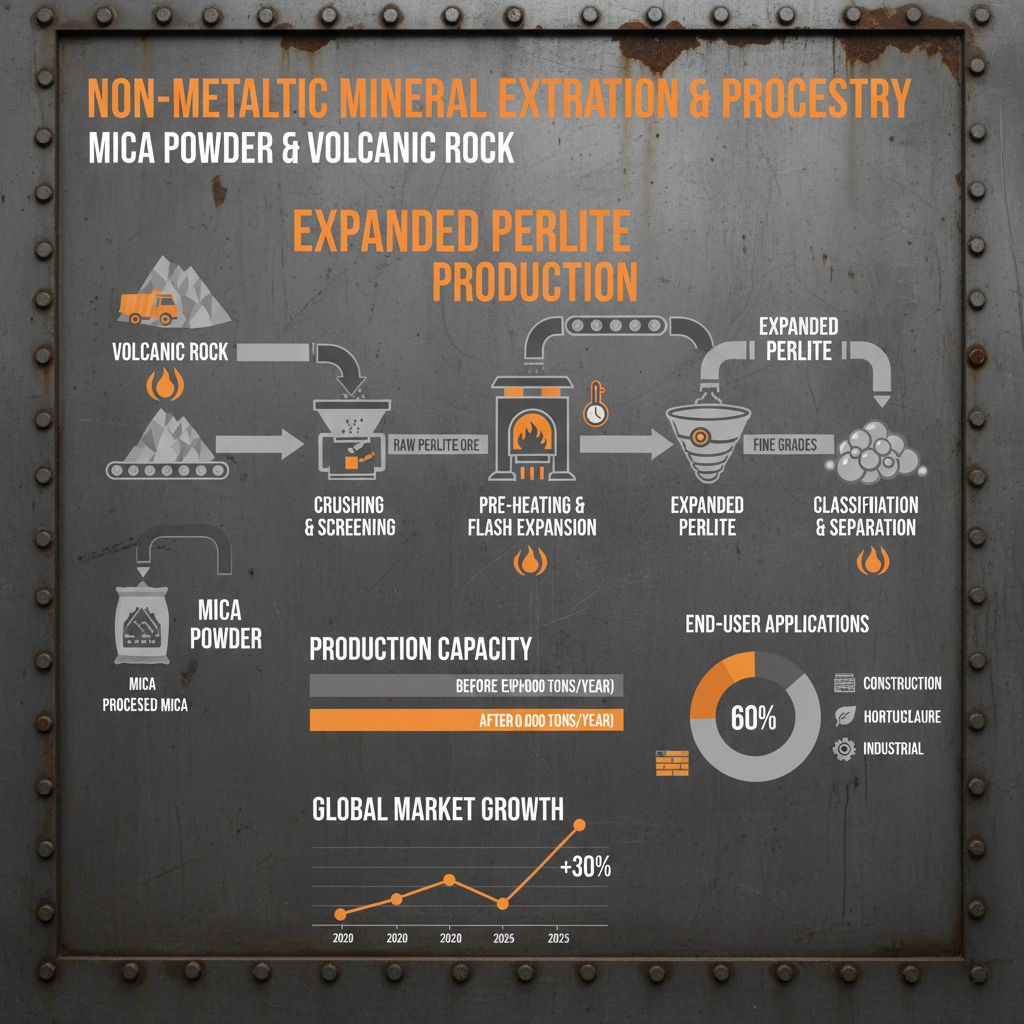
Expansion perlite production is a thermochemical process that transforms raw perlite ore into an expanded material characterized by its lightweight, insulating, and inert properties. Raw perlite, a hydrated volcanic glass, contains a small percentage of trapped water. When heated to temperatures between 850°C and 900°C, this water rapidly vaporizes, creating steam that expands the perlite into a cellular structure.
This expansion results in a material with a significantly reduced density – often less than 100 kg/m³ – and a highly porous structure. The resulting expanded perlite is then cooled, dried, and graded into various particle sizes depending on its intended application. The whole process of expansion perlite production requires precise control of temperature, heating rate, and residence time to achieve desired product characteristics.
The process is fundamentally linked to both modern industrial needs and essential humanitarian concerns. Its application in construction promotes energy efficiency, while its use in horticulture supports food production. The simplicity and relative cost-effectiveness of the expansion process contribute to its widespread adoption and accessibility.
Key Factors Influencing Expansion Perlite Production
Several key factors dictate the quality and efficiency of expansion perlite production. These include the chemical composition of the raw perlite ore, the moisture content, the heating rate, the furnace temperature, and the residence time within the furnace. The presence of impurities in the ore can impact the expansion ratio and the final product’s color.
Careful control over these parameters is crucial to achieve optimal expansion and desired product characteristics. Variations in these factors can result in uneven expansion, reduced insulating properties, or compromised structural integrity.
Expansion Perlite Production Efficiency by Method
Global Applications of Expansion Perlite Production
Expanded perlite finds widespread applications across diverse sectors. In the construction industry, it’s a key ingredient in lightweight concrete, plaster, and insulating materials, contributing to energy-efficient buildings and reduced construction costs. Its thermal and acoustic insulation properties make it ideal for various building components, from wall panels to roofing systems.
In horticulture, expanded perlite is used as a soil amendment to improve aeration, drainage, and water retention, promoting healthy plant growth. It’s commonly utilized in potting mixes, hydroponic systems, and seed starting blends. In remote industrial zones, expanded perlite’s lightweight nature simplifies transportation and handling.
Advantages and Long-Term Value of Expansion Perlite Production
The advantages of using expanded perlite are numerous. Its lightweight nature reduces transportation costs and simplifies installation, while its excellent thermal insulation properties contribute to significant energy savings. Expanded perlite is also chemically inert, non-combustible, and resistant to mold and mildew, ensuring long-term durability and safety.
The long-term value stems from its contribution to sustainable building practices, efficient agricultural production, and reduced environmental impact. Choosing expanded perlite represents a commitment to both economic viability and environmental responsibility, fostering trust and innovation within the industry.
Future Trends and Challenges in Expansion Perlite Production
Future trends in expansion perlite production focus on enhancing efficiency, reducing environmental impact, and developing new applications. Research and development efforts are underway to optimize furnace designs, explore alternative energy sources, and improve the recyclability of perlite products. The integration of digital technologies, such as automated process control and data analytics, will further streamline production and improve quality control.
One significant challenge is minimizing energy consumption during the expansion process. Exploring the use of renewable energy sources, such as solar or biomass, could substantially reduce the carbon footprint of perlite production. Additionally, developing innovative methods for reusing or recycling expanded perlite at the end of its life cycle is crucial for promoting circular economy principles.
The push towards greener building materials and sustainable agricultural practices will continue to drive demand for expanded perlite. Adapting to these trends and embracing innovation will be essential for the long-term success of the industry, reinforcing the importance of responsible expansion perlite production.
Key Considerations for Sustainable Expansion Perlite Production
| Raw Material Quality |
Energy Efficiency |
Waste Management |
Product Innovation |
| Perlite Ore Purity (Chemical Composition) |
Furnace Thermal Efficiency Rating (1-10) |
Dust Collection System Effectiveness (%) |
New Application Development (Score 1-10) |
| Moisture Content of Raw Perlite (%) |
Fuel Consumption Rate (Units/Ton) |
Perlite Waste Recycling Rate (%) |
Particle Size Customization Options |
| Presence of Harmful Impurities (ppm) |
Heat Recovery System Implementation |
Water Usage Minimization Techniques |
Coating/Surface Treatment Innovation |
| Ore Particle Size Distribution (mm) |
Furnace Insulation Quality (Rating 1-10) |
Air Emission Control Technology |
Development of Composite Materials |
| Ore Source Sustainability Certification |
Process Automation Level (Rating 1-10) |
Landfill Diversion Strategies |
Enhanced Insulation Performance |
| Ore Transportation Distance (km) |
Energy Audit Frequency (Years) |
Byproduct Utilization Opportunities |
Specialized Perlite Blends (e.g., fire-resistant) |
FAQS
The lifespan of structures built with expanded perlite concrete is comparable to that of traditional concrete structures, often exceeding 50 years with proper maintenance. The lightweight nature of perlite contributes to reduced stress on the building's foundation, enhancing its longevity. Furthermore, perlite’s inherent resistance to fire, mold, and pests further extends the structure’s service life, making it a durable and sustainable building material.
The environmental impact of expansion perlite production varies depending on the mining and processing practices employed. Responsible producers prioritize minimizing dust emissions, managing water resources effectively, and restoring mined land. Ongoing research focuses on reducing energy consumption during the expansion process and developing methods for recycling or repurposing expanded perlite waste, promoting a more sustainable lifecycle.
Different methods of expansion perlite production, such as rotary kiln, direct flame, and fluidized bed, vary in terms of energy efficiency, product quality, and production capacity. Rotary kilns are commonly used for large-scale production, while fluidized bed systems offer precise temperature control and uniform expansion. Direct flame methods are simpler but may result in less consistent product characteristics.
While expanded perlite itself is chemically inert and non-toxic, its use in direct food contact applications is typically regulated by food safety standards. It's commonly used as a filter aid in food processing, but direct packaging requires specialized grades that meet stringent regulatory requirements. It's crucial to verify compliance with relevant food safety regulations before using expanded perlite in any food-related application.
The cost of expanded perlite is influenced by several factors, including the price of raw perlite ore, energy costs, transportation expenses, and production volume. Geographical location, processing technology, and demand fluctuations also play a role. Producers often offer various grades and packaging options, which affect the overall price. Sustainable sourcing and efficient production methods can help minimize costs.
Beyond soil amendment, expanded perlite is utilized in horticulture for seed starting, hydroponic systems, and as a growing medium for orchids and other epiphytic plants. Its excellent drainage and aeration properties create an optimal environment for root development. It's also used in propagation, providing a sterile and well-drained medium for rooting cuttings. Its lightweight nature makes it ideal for rooftop gardens and vertical farming.
Conclusion
In conclusion, expansion perlite production is a vital process with far-reaching applications across construction, horticulture, and various industrial sectors. Its unique properties – lightweight, thermal insulation, chemical inertness – make it a versatile and sustainable material that addresses critical challenges related to energy efficiency, food production, and environmental responsibility. Understanding the intricacies of this production process and embracing innovation is crucial for maximizing its benefits.
Looking ahead, the future of expansion perlite production lies in adopting sustainable practices, optimizing energy efficiency, and developing new applications through research and innovation. By prioritizing responsible sourcing, minimizing environmental impact, and fostering collaboration across the industry, we can unlock the full potential of this valuable resource and contribute to a more sustainable future. For more information and to explore our product range, visit our website at www.shunmining.com.