The global construction and mineral processing sectors are currently witnessing a significant shift toward high-performance additives to enhance concrete durability and structural integrity. Within this context, identifying a reliable silica fume supplier becomes a critical strategic decision for engineering firms aiming to reduce permeability and increase compressive strength in extreme environments.
The challenge lies in the consistency of the material's amorphous silica content and particle size distribution. Variations in quality can lead to unpredictable workability and potential cracking, which directly impacts the lifecycle of infrastructure projects. As industry standards evolve, the demand for precise material specifications is replacing the traditional reliance on bulk generic procurement.
This analysis examines the technical criteria for evaluating mineral additive providers and explores how specialized mineral products, such as those integrated into modern landscape and industrial designs, contribute to overall project resilience. We will detail the selection framework required to ensure long-term material stability and performance.


The primary mechanism by which silica fume improves concrete is through the pozzolanic reaction, where the ultra-fine particles react with calcium hydroxide to create additional calcium silicate hydrate (C-S-H) gel. This fills the microscopic voids between cement grains, significantly increasing the density of the matrix.
From an engineering perspective, this "filler effect" reduces the permeability of the structure, making it highly resistant to chloride ion penetration and sulfate attacks. This is essential for marine structures and industrial flooring where chemical corrosion is a primary failure mode.
When auditing a potential partner, the first metric is the SiO2 content. High-purity amorphous silica is required to ensure the pozzolanic reaction is efficient. Impurities can lead to alkali-silica reactions (ASR), which can cause internal expansion and cracking over time.
Particle size distribution is equally vital. The average particle size must be significantly smaller than standard cement (typically around 0.1 to 0.2 microns). If the particles are too coarse, the filler effect is diminished; if too fine, the water demand increases excessively, compromising the water-to-cement ratio.
Furthermore, moisture content and bulk density must be strictly controlled during storage and transport. Inconsistent bulk density often indicates poor processing or contamination, which can lead to volumetric errors during batching in the concrete plant.
The introduction of ultra-fine mineral additives creates a paradox in concrete rheology. While the resulting structure is vastly more durable, the increased surface area of the particles leads to a higher demand for water and chemical admixtures to maintain flow.
Consequently, the role of a technical silica fume supplier extends beyond raw material delivery to include guidance on the compatibility between the mineral additive and the specific cement chemistry used in the local region.
Different mineral fillers offer varying degrees of performance enhancement. While fly ash provides better workability and lower heat of hydration, silica fume is unmatched in creating ultra-high-performance concrete (UHPC) due to its extreme fineness and high silica content.
The following assessment illustrates the relative engineering ratings for different mineral additive profiles based on permeability reduction, compressive strength contribution, and cost-efficiency.
Beyond heavy industrial concrete, the principles of mineral purity and particle control extend to specialized architectural materials. For instance, in high-end landscape design, the use of colored glass particles and irregular glass sand mirrors the need for specific size grading (e.g., 1-3mm to 20-30mm) to ensure stability in gabion walls or waterscape effects.
In these representative engineering scenarios, the focus shifts from chemical reactivity to physical properties such as wear resistance, frost resistance, and UV stability. Whether it is a high-strength bridge pier or a decorative urban pavement, the quality of the mineral source determines the long-term visual and structural success of the project.
The industry is moving toward "precision mining," where mineral products are tailored to the specific molecular requirements of the end-user. This includes the development of nano-silica and hybridized mineral blends that combine the strengths of multiple pozzolans to optimize carbon footprints.
Sustainability is also driving a shift toward the recycling of non-metallic minerals. The ability to process waste glass into high-grade landscape sands or recover silica from industrial by-products is becoming a competitive advantage for modern mineral enterprises.
Automation in processing plants, including AI-driven particle size analysis and automated sorting, is reducing the variance between batches, ensuring that engineers can design with tighter tolerances and less material waste.
Selecting a partner requires a multi-dimensional approach. A procurement team should not only evaluate the price per ton but also the stability of the supply chain and the technical support available for mix design optimization.
The capacity for personalized design—such as customizing colors for glass sands or adjusting the fineness of mineral powders—indicates a supplier's technical maturity. Professional proofing engineers are essential for validating samples before full-scale project deployment.
Below is a framework for comparing different configuration profiles when selecting mineral additive sources for diverse project requirements.
| Configuration Profile | Primary Specification | Key Performance Factor | Recommended Use Case |
|---|---|---|---|
| Baseline Grade | Standard Purity | General Strength | Standard Residential |
| Precision Grade | Controlled Particle Size | Low Permeability | Industrial Floors |
| High-Duty Profile | Maximum Reactivity | Extreme Compressive | Bridge Girders |
| Architectural Profile | Custom Color/Texture | Aesthetic Durability | Urban Landscaping |
| Marine Profile | Low Alkali Content | Chloride Resistance | Port Infrastructure |
| Eco-Hybrid Grade | Recycled Content | Carbon Reduction | Green Buildings |
Silica fume accelerates the early strength gain due to its high surface area and pozzolanic activity. However, it also increases the risk of plastic shrinkage cracking. Proper curing measures, such as early misting or the use of curing compounds, are essential to maintain moisture and prevent surface fissures during the initial hydration phase.
Typically, silica fume replaces 5% to 15% of the cement by weight. Exceeding 15% often leads to excessive water demand and can make the mix too sticky for proper placement. The exact percentage should be determined through trial batches, balancing the required compressive strength against the acceptable workability of the fresh concrete.
Yes, ternary blends (Cement + Fly Ash + Silica Fume) are common in high-performance concrete. Fly ash improves the workability and reduces the heat of hydration, while silica fume provides the high early strength and low permeability. This combination optimizes both the construction process and the long-term durability of the structure.
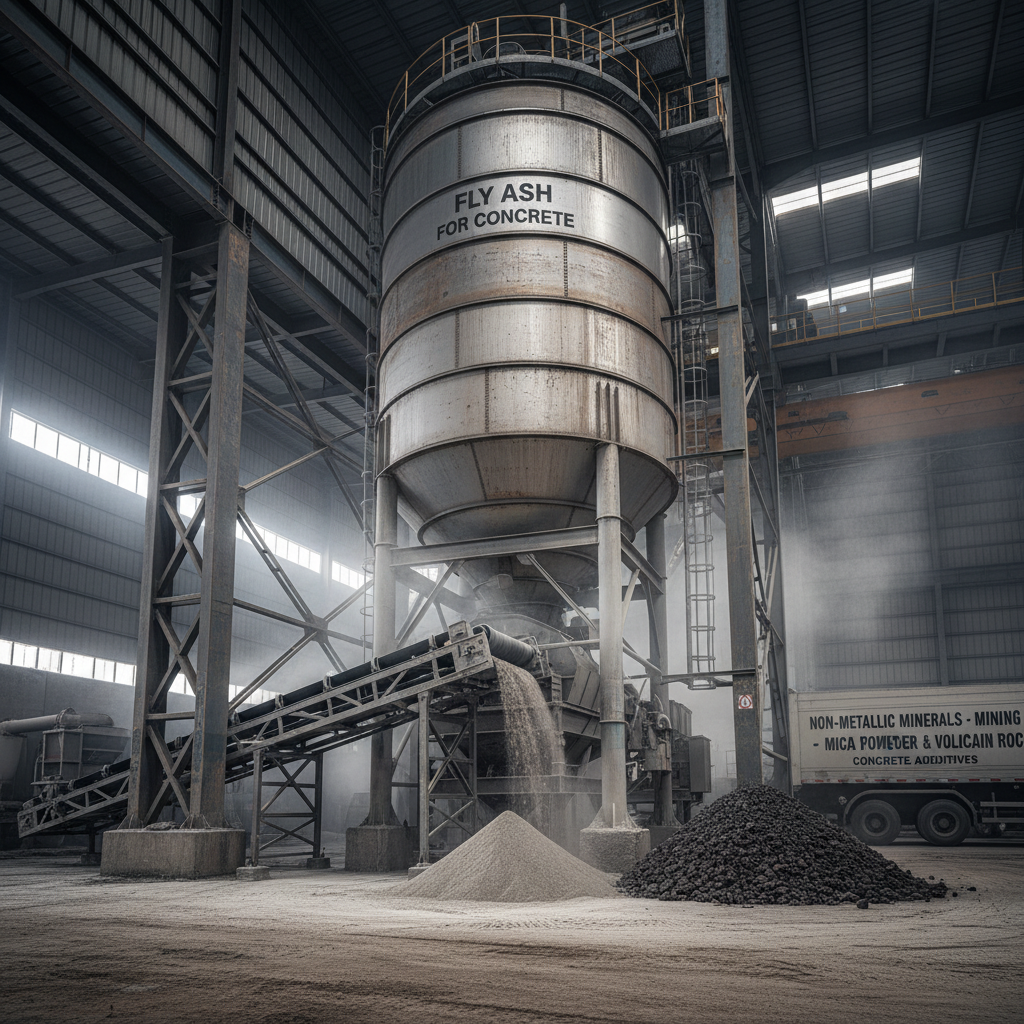
Mineral additives should be stored in dry, moisture-proof silos or sealed bags. Silica fume, in particular, can clump if exposed to humidity, which affects its dispersion in the mix. Using pneumatic conveying systems and ensuring silos are airtight is the industry standard for maintaining consistent bulk density and purity.
Key indicators include inconsistent color, the presence of visible aggregates in the powder, or a significant drop in the flow test results of the concrete mix. If the material exhibits high moisture content or abnormal bulk density, it may indicate contamination or poor processing, which can compromise the final structural integrity.
Verification should involve requesting recent third-party laboratory test reports for specific batches (not just general product sheets). Cross-referencing the report IDs with the issuing laboratory and requesting a sample for independent testing of the SiO2 content and particle size distribution is the most reliable method for quality assurance.
The transition toward high-performance infrastructure requires a shift from commodity-based procurement to technical partnerships. The ability to control mineral purity and particle size distribution is the deciding factor in whether a project achieves its design life or suffers from premature degradation.
By implementing a rigorous evaluation matrix—focusing on chemical reactivity, physical grading, and supply chain stability—firms can mitigate the risks associated with material variance. For those seeking high-standard mineral solutions, visiting established providers like www.shunmining.com ensures access to products that meet the strict criteria of modern non-metallic mineral processing.